
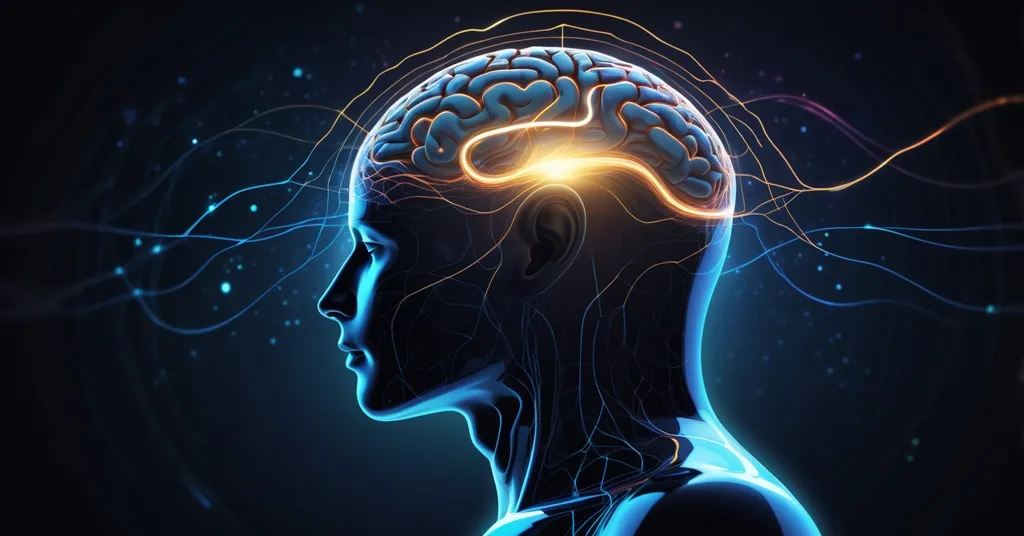
What are Brain Computer Interfaces?
Brain-Computer Interfaces (BCIs) are revolutionizing human potential by connecting mind to machine, driving exponential growth in healthcare, gaming, and beyond. With a market projected at $506 million by 2029, BCIs offer transformative 10x impact.
With AI reshaping industries at breakneck speed, Brain-Computer Interfaces (BCIs) are emerging as the next frontier of exponential technology, poised to revolutionize how we heal, work, and interact. These groundbreaking systems create a direct line between the human brain and machines, enabling control of devices with mere thoughts—think of it as using your mind as the ultimate remote. From restoring movement in paralyzed individuals to crafting immersive digital experiences.
The Exponential Promise of BCIs
Brain-Computer Interfaces are no longer confined to futuristic visions—they’re a tangible reality, fueled by neurotechnology breakthroughs and massive venture capital investments. At their core, BCIs translate brain signals into actionable commands, bridging the gap between mind and machine. This technology spans a spectrum of approaches: invasive implants that connect directly with neural tissue for precision, non-invasive headsets that capture brain activity externally for accessibility, and hybrid systems blending both for optimal results. The market for BCI technology is on a meteoric rise, projected to reach $506 million by 2029 with a 14.1% annual growth rate, and long-term estimates suggest a staggering value beyond $400 billion. This isn’t just growth—it’s exponential disruption.
Driving this surge are innovators who are turning science into solutions. Neuralink, backed by $680 million, is developing high-bandwidth implants to restore motor functions and enhance cognitive abilities, with human trials already underway. Synchron, with $145 million in funding, offers a minimally invasive stentrode that allows paralyzed patients to generate text at 14.4 characters per minute—picture a tweet composed purely by thought. Meanwhile, companies like Neurable are democratizing access with consumer products such as the MW75 Neuro headphones, priced at $699, enabling thought-controlled audio environments. These milestones showcase how BCI technology embodies the ExO ethos of leveraging cutting-edge tools for outsized impact.
How BCIs Work: Bridging Mind and Machine
Understanding BCIs doesn’t require a neuroscience degree—it’s about connecting the dots between brain activity and technology. Invasive BCIs, like those from Neuralink or Paradromics, involve implants placed within or on the brain to capture detailed signals, ideal for medical applications requiring precision. Non-invasive options, such as Kernel’s headsets, use external sensors to detect brain waves, making them more accessible for consumer use despite lower resolution. Hybrid approaches combine these strengths, offering flexibility for diverse needs. For a deeper dive into the mechanisms behind this technology, you can explore this comprehensive overview of BCIs.
Material science is also playing a pivotal role in making BCIs safer and more effective. Soft, gel-like materials called hydrogels are engineered to mimic the brain’s natural structure, reducing irritation and immune responses in invasive implants. These advancements address longstanding issues like scarring around implants, paving the way for longer-lasting, more reliable devices. For business leaders and innovators, this signals an opportunity: as materials improve, costs could drop, opening doors to scalability and wider adoption of neurotechnology innovation.
Transformative Applications: From Healthcare to Gaming
The reach of BCIs extends far beyond a single sector, promising to reshape multiple industries with exponential impact. In healthcare, the potential is life-changing. Synchron’s technology has enabled a paralyzed patient to communicate via thought alone, a breakthrough for those with conditions like ALS, with impressive results in text generation speed and patient outcomes. MindMaze, with $340 million in funding, integrates virtual reality with BCIs for neurorehabilitation, aiding stroke and trauma recovery. Looking ahead, real-time speech decoding by companies like Paradromics, targeting commercialization by 2029, could give voice to the voiceless.
Beyond medical uses, consumer applications are gaining traction. Gaming giants like Valve are exploring BCI integration for metaverse environments, creating experiences where players control avatars with their minds. Imagine pairing this with platforms like Apple Vision Pro for augmented reality interactions driven by thought—suddenly, digital immersion reaches a whole new level. Even everyday uses are emerging, with skin-mounted hydrogel sensors inspiring potential fitness and mental health monitoring tools. These examples highlight how BCIs can fuel exponential growth in healthcare, entertainment, and personal wellness, aligning with ExO strategies for market disruption.
Challenges on the Horizon: Cost, Ethics, and Privacy
As investment in BCIs soars, so do the hurdles that could temper this exponential trajectory. Cost remains a formidable barrier—Paradromics’ implants, for instance, exceed $100,000, restricting access to a select few. While material innovations like hydrogels promise scalability, the timeline for affordable solutions is uncertain. This raises a critical question: will BCIs widen existing disparities in healthcare and opportunity, or can they be democratized?
Ethical dilemmas and privacy risks add further complexity. The threat of “brainjacking”—where hackers breach neural data to manipulate thoughts or motor control—isn’t science fiction but a looming concern. The sensitivity of new biosensing materials, capable of detecting intricate brain signals, amplifies both their potential and vulnerability. If neural data becomes the new frontier for breaches, akin to hacking a smartphone but with access to your deepest thoughts, the stakes couldn’t be higher. Additionally, who owns this data, and how is consent managed when thoughts are digitized? For a broader perspective on these issues, consider this discussion of ethical concerns surrounding BCIs in healthcare. These challenges demand urgent attention to ensure BCIs empower rather than exploit.
Solutions and Innovations: Scaling Access and Safety
Despite these obstacles, progress is underway to address the barriers facing BCI technology. Regulatory advancements, such as the FDA’s Breakthrough Device designations, are fast-tracking medical approvals, with Paradromics eyeing market entry by 2029. Material breakthroughs are equally promising—bioactive coatings on implants promote neural growth and reduce inflammation, while hydrogel systems can deliver anti-inflammatory drugs directly at implant sites, improving patient outcomes and potentially shortening clinical timelines.
On the accessibility front, global efforts are taking shape. China aims for equitable BCI access by 2030, while open-source platforms like OpenBCI encourage community-driven innovation to lower barriers. Cybersecurity is also gaining focus, with calls for encrypted neural signals and real-time monitoring to prevent unauthorized access. For insights into future developments and obstacles, academic resources on BCI applications and challenges projected for 2029 provide valuable context. These solutions underscore a pivotal moment for the industry—balancing rapid innovation with responsible safeguards will define the future of human augmentation.
Let’s reflect on some key questions and actionable insights to navigate this complex landscape:
- How can global ethical frameworks for neural data ownership and consent be effectively implemented across diverse regulatory environments? Harmonizing standards through international bodies like the UN or WHO could establish a foundation, though adapting to local cultural and legal norms will require tailored policies and cross-border collaboration.
- What cybersecurity measures are most critical to prevent “brainjacking” and protect neural data from breaches? Encryption of brain signals, multi-factor authentication for BCI devices, and continuous monitoring for anomalies are essential to safeguard this deeply personal data.
- How can accessibility to BCI technology be ensured for marginalized and neurodiverse populations? Subsidized programs, partnerships with NGOs, and support for open-source initiatives like OpenBCI can broaden access, but sustained funding and policy commitment are vital.
- What mechanisms can balance human agency with machine control in BCI-driven actions? User override protocols and transparent AI decision-making within BCIs can maintain human control, supported by legal frameworks that clarify accountability for automated actions.
A Counterpoint: The Risk of Overhype
While optimism surrounds BCIs, a balanced perspective requires acknowledging the risk of overpromise. Not every application may deliver on its transformative hype—consumer products like thought-controlled headphones might struggle with accuracy or user adoption, becoming niche rather than mainstream. Similarly, medical BCIs face rigorous clinical and ethical scrutiny that could delay timelines beyond projections like 2029. Venture capital flooding the sector, with Neuralink alone at $680 million, might inflate expectations, risking a bubble if breakthroughs lag. For a community perspective on these developments, explore discussions around Neuralink’s progress and user experiences. This isn’t to dampen enthusiasm but to urge a pragmatic approach: focus on incremental wins and robust safeguards to build trust and sustain momentum in neurotechnology innovation.
Shaping the Future of Human Potential
The journey of Brain-Computer Interfaces is one of boundless promise, powered by exponential technologies to redefine what it means to be human. Whether restoring communication to the paralyzed, enhancing cognitive abilities, or crafting digital worlds controlled by thought, BCIs are a gateway to unprecedented possibilities. Yet, their dual nature as tools of empowerment and potential sources of inequality demands collaboration across industries, governments, and communities. As a synthesized insight captures:
BCIs stand at the confluence of transformative potential and profound responsibility, requiring a balance of innovation with safeguards for privacy, autonomy, and equity to shape their impact on society.

ExO Insight Newsletter
Join the newsletter to receive the latest updates in your inbox.