
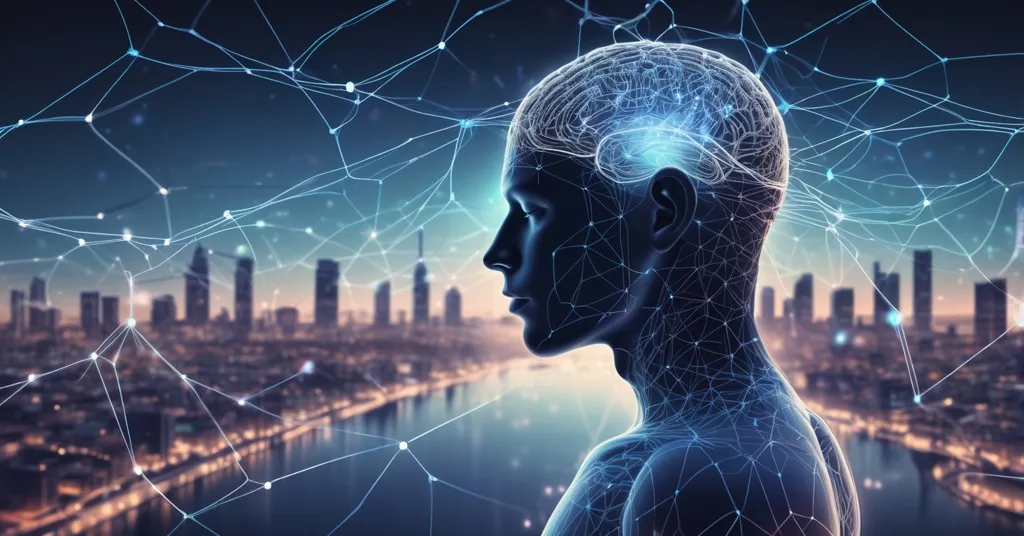
Neurotech 2025: Brain-Computer Interfaces
In 2025, brain-computer interfaces (BCIs) are revolutionizing human potential, enabling thought-controlled devices and driving a market projected to hit $11.2 billion by 2035. Yet, ethical dilemmas around privacy and inequality loom large.
The future of human potential is unfolding at a breathtaking pace. Picture a reality where thoughts can control devices, where paralyzed individuals speak again through neural signals, and where the boundaries of consciousness stretch into the digital realm. This is the landscape of 2025, where brain-computer interface technology (BCI) has surged from lab experiments to clinical breakthroughs, driving exponential growth in healthcare tech and beyond. For business professionals, consultants, and C-suite executives, this neurotech horizon offers a unique opportunity to achieve 10x impact while grappling with profound ethical stakes.
The Rise of Brain-Computer Interfaces
Brain-computer interfaces, or BCIs, are no longer a distant promise—they’re a tangible reality reshaping lives. These devices connect brain signals to external technology, enabling actions like typing or moving a cursor with mere thought. Leading the charge are innovators like Neuralink, whose Telepathy brain chip, part of the PRIME Study, has been implanted in seven human patients by 2025, with international trials approved in Canada and the UAE. For detailed insights into these trials, explore the latest updates on Neuralink's PRIME Study outcomes. Synchron’s Stentrode™ system stands out for its minimally invasive approach and integration with Apple devices—think controlling an iPhone or Apple Vision Pro purely by thought. Meanwhile, Paradromics’ Connexus BCI, with 421 microelectrodes, and Precision Neuroscience’s FDA-cleared Layer 7 Cortical Interface, boasting 1,024 electrodes, demonstrate the precision and scale of this revolution. Over 70 patients across these trials are already benefiting, a testament to decades of research now bearing fruit.
Market Potential and Exponential Growth
The financial promise of BCIs is as striking as the technology itself. Valued at $2.84 billion in 2024, the BCI market is projected to soar to $11.2 billion by 2035, growing at a robust 15.3% compound annual rate. The broader neurotechnology sector is on an even steeper trajectory, expanding from $15.3 billion to $58.5 billion over the same period, with the U.S. market alone expected to hit $2.7 billion by 2034. For a deeper dive into these projections, check out this market growth analysis for BCIs through 2025. Neuralink’s $5 billion valuation underscores investor confidence, while China’s plan for 13 BCI implants by 2025 signals a global race for dominance. These numbers aren’t just statistics—they represent a burgeoning field ripe for investment and innovation, offering business leaders a chance to pioneer transformative solutions in healthcare and beyond.
Ethical Challenges in Neurotechnology Innovation
While the financial and technical upside of BCIs is undeniable, the ethical stakes are equally high. What happens when your innermost thoughts become data that could be hacked or sold? Neural data privacy has emerged as a critical concern, with states like Colorado and California classifying brain data as sensitive personal information requiring explicit consent. Chile’s Supreme Court set a global precedent with the first ruling protecting brain data from consumer neurotech misuse. Beyond privacy, there’s the risk of creating “cognitive classes”—a divide where only the affluent access BCIs, deepening societal inequality. To explore varied perspectives on these issues, take a look at this discussion on ethical concerns in neurotechnology.
Then there’s the concept of digital immortality, the notion of preserving memories or personality in a digital format for future access. As one thought leader in the field poignantly stated:
Digital immortality should be approached as a choice, not an inevitability.
This idea, while awe-inspiring, raises questions of identity and autonomy. Could storing consciousness dilute what makes us human? Practical solutions are essential—leveraging blockchain for secure neural data storage offers transparency and ownership, while public-private partnerships, as seen in other tech sectors, could democratize access. An Exponential Organization (ExO) ethical framework, rooted in cognitive liberty and equity, can guide this balance, ensuring technology enhances rather than exploits.
Business Opportunities Across Industries
For visionary leaders, neurotechnology trends in 2025 extend far beyond healthcare, opening doors across diverse sectors. Consider workforce productivity: thought-controlled interfaces could revolutionize remote work by enabling seamless interaction with digital systems, slashing latency in communication. In gaming and entertainment, BCI integration with VR/AR could create immersive experiences—think of a player navigating a virtual world with a flick of thought. For a broader look at these possibilities, review this research on neurotechnology applications in healthcare and gaming. Education, too, stands to gain; imagine training programs using BCI-driven simulations to cut costs by 50%, allowing employees to master complex skills in half the time.
A hypothetical case illustrates the potential: a logistics firm partners with a neurotech startup to equip warehouse staff with BCIs for hands-free inventory management, boosting efficiency by 30%. These applications align with ExO principles like interfaces and scalability, offering businesses a chance to redefine operations. The convergence with other exponential technologies—AI to process neural signals in real-time, or IoT for device connectivity—amplifies the impact, creating ecosystems where innovation compounds. With venture capital pouring into the sector ($1.5 billion in 2022 alone), the entry points for strategic investment are clear for those ready to lead.
Counterpoints: Tempering the Hype
Yet, amidst the excitement, a balanced perspective is crucial. While BCIs promise exponential growth, challenges loom on the horizon. Market projections, though optimistic, may face headwinds from regulatory delays or consumer adoption barriers—some analysts suggest a slightly lower growth rate due to these hurdles. Technical readiness also warrants scrutiny; seamless integration with consumer devices like Apple’s ecosystem, while promising, could encounter latency or compatibility issues, delaying mainstream rollout beyond 2025. For a community-driven take on these obstacles, see this thread on Neuralink’s progress and challenges. Moreover, the ethical frameworks proposed, while visionary, lack direct precedent in neurotech governance. Could overregulation stifle innovation, or underregulation risk harm? Striking the right balance will test global collaboration, demanding leaders to think beyond short-term gains and consider long-term societal impacts.
Navigating the Future with ExO Principles
Harnessing the power of BCIs requires more than technical or financial acumen—it demands a mindset of responsible scaling. As a guiding principle in the field warns:
Exponential power requires exponential responsibility.
An ExO approach offers a roadmap, emphasizing a Massive Transformative Purpose (MTP) that prioritizes human enhancement over exploitation. Specific attributes like Community & Crowd can be applied by crowdsourcing ethical guidelines from global stakeholders, building trust in BCI deployment. Staff on Demand allows firms to tap specialized neurotech talent for rapid innovation cycles. Transparency in data handling, equitable access through subsidies or partnerships, and alignment with human values must anchor these strategies. For foundational knowledge on the technology itself, refer to this overview of brain-computer interface technology. For businesses, this means not just chasing market share but shaping a future where technology preserves what makes us human, as echoed in the sentiment:
The future of human consciousness is being written in code and carved in silicon. Our responsibility is to ensure that this future preserves and enhances the essential qualities that make us human.
Key Questions for Reflection
- What are the long-term implications of memory encoding and transfer on human relationships?
These technologies could redefine how we preserve legacies or share experiences, but they risk eroding personal boundaries or creating dependency on digital systems for identity. - How can global regulatory frameworks harmonize to protect neural data privacy without curbing innovation?
Collaborative standards, inspired by existing data laws like GDPR, could set a baseline while allowing regional flexibility for breakthroughs. - How will blurring human-AI boundaries reshape our understanding of consciousness?
This convergence may expand our definition of sentience, yet it could dilute the unique, subjective nature of human experience if not handled with care. - What safeguards can prevent “cognitive classes” based on access to BCI technology?
Public-private partnerships and subsidies could ensure BCIs aren’t a privilege reserved for the elite, promoting equitable access.

ExO Insight Newsletter
Join the newsletter to receive the latest updates in your inbox.