
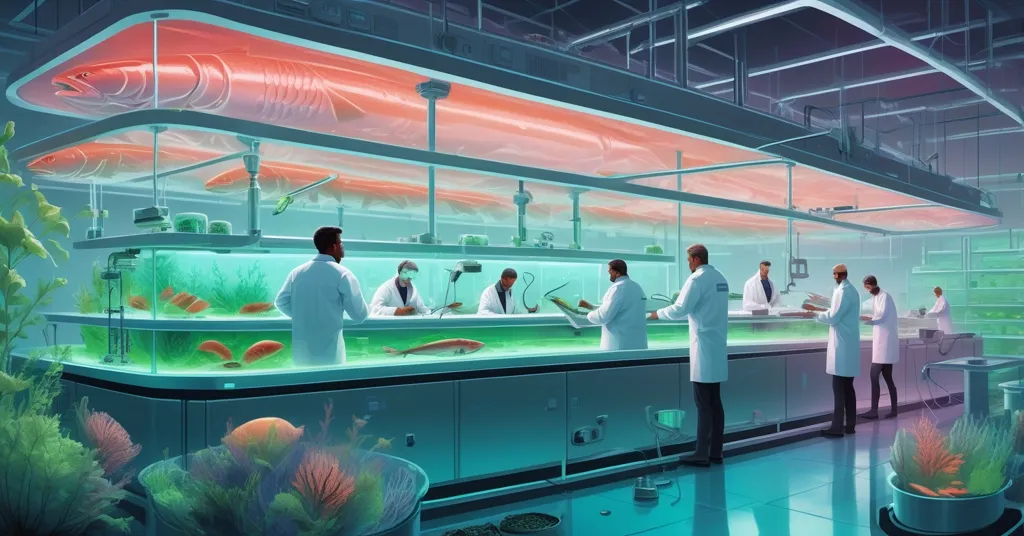
Cultivated Seafood Tech Drives Sustainable Whole-Cut Fillets
Dive into the future of food with cultivated seafood, where exponential tech and innovative scaffolds create sustainable whole-cut fillets that rival wild fish. As overfishing threatens global stocks, this revolution offers a tasty, eco-friendly solution poised to disrupt markets.
The seafood industry faces a pressing dilemma as global demand surges—projected to double by 2050—while wild fish stocks dwindle under the strain of overfishing. With over 30% of global fisheries overexploited, according to the FAO, businesses and innovators are at a crossroads: cling to unsustainable practices or pivot to groundbreaking solutions like cultivated seafood. Enter whole-cut fillets, crafted in labs with cutting-edge scaffold technologies, offering the taste and texture of premium salmon or tuna without the environmental cost. This isn’t just a food trend; it’s a seismic shift powered by exponential technologies in food innovation, poised to transform supply chains and redefine sustainability for forward-thinking organizations.
The Seafood Crisis: Why Innovation Is Non-Negotiable
Overfishing and climate change have pushed traditional seafood sourcing to its limits, threatening ecosystems and the livelihoods tied to them. The urgency to meet consumer demand for fish—while aligning with goals like SDG 14 (Life Below Water)—has sparked a race for alternatives. Cultivated seafood, also known as lab-grown fish, emerges as a powerful answer, promising not just sustainability but also a scalable path to market disruption. For business leaders, consultants, and C-suite executives, this represents an opportunity to lead in alternative protein trends, blending ethical impact with exponential growth potential through solutions focused on sustainable seafood practices.
Breakthrough Scaffold Technologies: Building Fish from the Ground Up
At the core of cultivated seafood’s promise are edible scaffolds—ingenious frameworks that guide cells to form structured, whole-cut fillets instead of the shapeless minced products of earlier attempts. Three pioneering materials are setting the standard, each mimicking the natural muscle of fish with startling accuracy:
- Cellulose Scaffolds: Derived from plants or bacteria, often using innovative sources like spinach leaves, these scaffolds create a firmness nearly identical to wild sockeye salmon. Measured scientifically, they achieve a texture hardness of 0.82 Newtons, just shy of salmon’s 0.87 Newtons after a two-week growth process.
- Mycelium Scaffolds: Sourced from the root structure of mushrooms, thanks to innovators like Ecovative and MyForest Foods, mycelium offers a texture akin to raw tuna at 0.71 Newtons. Beyond texture, it brings dietary fiber and a savory umami punch to the table.
- Algae-Derived Hydrogels: Blends like alginate-gellan, used by companies such as Umami Bioworks and Avant Meats, deliver a softer bite at 0.65 Newtons while infusing marine flavors and omega-3 fortification—a nod to the ocean in every bite.
What ties these technologies together is their ability to align fibers with over 85% precision, much like the grain in a steak, ensuring the fillet holds its shape during cooking and delivers that familiar, satisfying chew. These aren’t just lab experiments; they’re the foundation of a new seafood era, bridging the sensory gap between wild-caught and lab-grown with uncanny precision through advanced scaffold innovations for lab-grown fish.
Path to Market: Slashing Costs and Clearing Regulatory Hurdles
Texture parity is only half the battle—affordability is the key to mainstream adoption. The numbers are promising and paint a clear picture of market readiness. Current projections show scaffold costs diving sharply by 2030: cellulose dropping from $92/kg to $18/kg, mycelium from $68/kg to $12/kg, and algae blends from $55/kg to $14/kg, with further reductions below $10/kg expected by 2028. This trajectory means a 120-gram whole-cut fillet could cost just $2.20 to produce, enabling retail pricing under $15 once bioreactor expenses stabilize. Sustainable seafood isn’t a distant dream—it’s swimming closer to grocery shelves as a competitive staple, as detailed in recent analyses of cost reduction trends for scaffold materials.
On the regulatory front, momentum is building. Wildtype, a trailblazer with its cultivated coho salmon, is slated for FDA “no-questions” approval by May 2025, a milestone poised to unlock market entry. Mycelium and cellulose scaffolds are on track for clearance by mid-2026, while the European Food Safety Authority (EFSA) is reviewing algae-based options with authorization anticipated by January 2026. In Japan, limited sales of cultivated tuna, led by Umami Bioworks, are planned for the first half of 2026. These developments signal a maturing global framework, addressing safety concerns and paving the way for consumer trust, with further details available on the FDA approval timeline for Wildtype’s coho salmon.
Manufacturing Marvels: Scaling Up with Precision
Innovations in production are turbocharging this shift. Spinach-leaf cellulose scaffolds, for instance, cut cooking loss to 44% compared to 52% in traditional methods, meaning more fillet survives the pan. Ecovative’s AirMycelium farm aims to churn out 10,000 tons of scaffold by-product yearly by 2028, while a Finnish pulp-to-nanocellulose line will produce 300 tons annually from early 2026. Companies like BlueNalu, partnering with Roots Marine™, and Finless Foods, crafting tuna toro prototypes, are redefining what’s possible in cellular agriculture. As one industry insight notes,
aligned, edible scaffolds are no longer the bottleneck for whole-cut cultivated seafood,
marking a turning point in overcoming past limitations.
Moreover, the forecast of
texture parity with premium sushi-grade fish within reach,
with gaps in firmness and springiness under 8%, highlights how tantalizingly close the industry is to replicating the sushi counter experience. This isn’t science fiction—it’s a dining revolution ready to unfold, with deeper insights shared in discussions about scaffold technologies for whole-cut fillets.
Exponential Growth Through Tech: Embracing ExO Principles
What elevates cultivated seafood from niche to transformative is its alignment with Exponential Organization (ExO) principles, leveraging cutting-edge tools for 10x impact. Machine learning optimizes cell growth, real-time dashboards track production efficiency, and APIs streamline supply chain integration, collectively slashing R&D cycles by up to 60%. This tech-driven mindset isn’t just about speed—it’s about reimagining food systems to tackle global challenges like overfishing and climate impact. For businesses, adopting these exponential technologies in food tech means not just keeping up but leading the charge in sustainable innovation.
Challenges and Counterpoints: A Balanced View
Yet, no transformation comes without hurdles. Scaling bioreactor technologies remains a technical puzzle—high-density cell cultures and costly growth media still inflate production expenses beyond scaffold costs. Then there’s the environmental footprint of large-scale scaffold production; while materials like mycelium are sustainable in theory, their mass cultivation could strain agricultural or energy resources if not managed with care. Consumer skepticism also looms large—will diners embrace “lab-grown” fish, even with perfect texture? Cultural barriers and the need for transparent labeling add layers of complexity to market acceptance, as explored in broader market trends and challenges for cultivated seafood.
On the flip side, these challenges are not insurmountable. Lifecycle assessments can mitigate production impacts, while strategic education campaigns—highlighting sustainability wins—can shift consumer perceptions. Regulatory variations across regions, like the FDA’s consultation process versus Japan’s early pilot sales, might stagger global rollouts but also create unique opportunities for first-movers. The key lies in balancing premium positioning with accessibility, ensuring cultivated seafood doesn’t remain an elite offering but reaches diverse markets hungry for ethical alternatives.
Strategic Opportunities for Businesses: Seizing the Wave
For C-suite executives and entrepreneurs, cultivated seafood isn’t just a product—it’s a gateway to market differentiation and ESG (Environmental, Social, Governance) leadership. Consider piloting partnerships with innovators like Wildtype or BlueNalu to integrate lab-grown fillets into your supply chain. Retailers and restaurant chains could test consumer response through exclusive launches, while food tech investors might explore funding bioreactor scale-ups for long-term ROI. Aligning with sustainability metrics in your 2025 strategy positions your organization not just as a player but as a pioneer in alternative proteins. The question isn’t if this wave will hit—it’s whether you’ll ride it to exponential growth.
Thought-Provoking Questions and Insights
How can cultivated seafood balance premium pricing with accessibility for widespread adoption?
Tiered pricing, retailer partnerships, and policy incentives could target both luxury and mainstream segments, ensuring this innovation feeds diverse markets without losing its pioneering edge.
What barriers persist in scaling bioreactor technologies beyond scaffold costs?
High-density cultures and expensive growth media remain costly. Innovation in bioprocessing and shared infrastructure could crack these barriers, making scale-up a reality for bold investors.
How could regulatory differences across regions shape the global rollout of cultivated seafood?
Disparities—such as Japan’s early sales versus the EU’s rigorous novel food reviews—may create uneven market entries. Regions moving faster could gain competitive edges, urging businesses to strategize geographically.
What environmental impacts might arise from scaling scaffold production, especially for cellulose and mycelium?
While inherently sustainable, mass production could stress resources like land or energy. Proactive lifecycle assessments and renewable energy integration are essential to keep the eco-promise intact.
How will consumer acceptance of cultivated seafood evolve as texture and pricing near parity with wild-caught fish?
Sensory match will boost adoption, but success hinges on educating consumers about sustainability benefits and using clear, trust-building labeling to overcome hesitations around “lab-grown” perceptions.
Final Reflections and Key Takeaways
The journey of cultivated seafood is no longer a distant vision—it’s a tangible shift being crafted in labs today, ready to ripple through global food systems. As costs drop, textures perfect, and regulatory doors swing open, the chance to embed these innovations into your organization’s strategy has never been clearer. Explore partnerships with cultivated seafood trailblazers, integrate sustainability goals into your roadmap, or position your brand as a leader in this emerging market. The future of seafood isn’t waiting on the horizon—it’s here, offering a feast of opportunity for those ready to dive in.
- Cultivated seafood, fueled by scaffolds like cellulose and mycelium, mirrors wild fish texture, offering a sustainable alternative.
- Projected retail prices under $15 per fillet by 2030 make this a disruptive force for businesses eyeing market share.
- Regulatory milestones, starting with Wildtype’s FDA approval in 2025, signal global readiness for adoption.
- Exponential technologies like AI and real-time data embody ExO principles, driving 10x growth in food tech.
- Strategic partnerships and sustainability alignment offer businesses a chance to lead in alternative proteins.

ExO Insight Newsletter
Join the newsletter to receive the latest updates in your inbox.