
AI and VR Transform Education - The Exponential Future of Learning
AI, VR, and AR are revolutionizing education by creating personalized, immersive learning experiences. From virtual classrooms to corporate training, these technologies boost engagement and break barriers. Discover how they’re shaping the exponential future of learning.
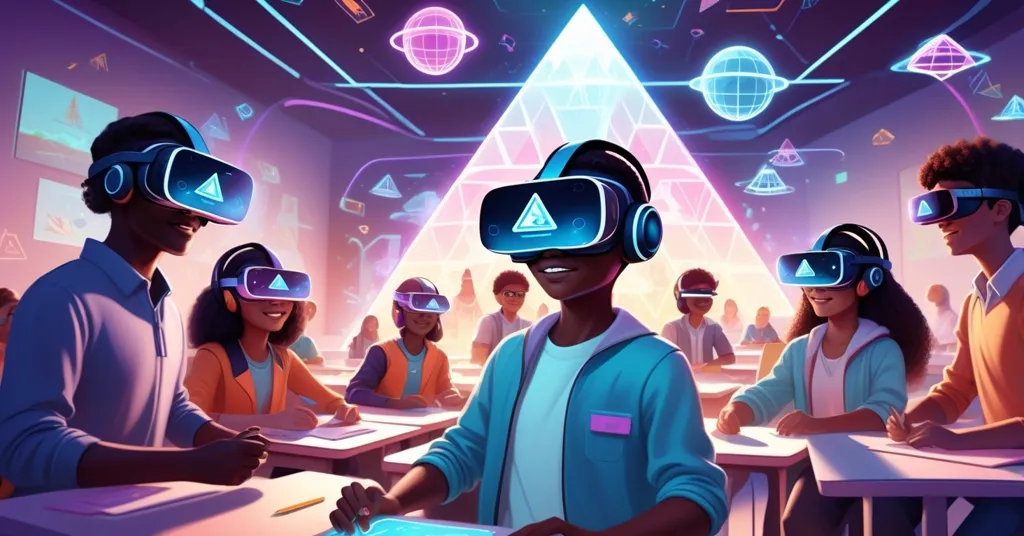
Step into a classroom where students aren’t just reading about the pyramids of ancient Egypt—they’re walking through them, guided by a virtual tutor that adapts to their every question. This is the reality being forged by the powerful fusion of artificial intelligence (AI), virtual reality (VR), and augmented reality (AR). These exponential technologies are reshaping education, creating personalized learning environments that boost engagement, deepen understanding, and shatter traditional barriers. From K-12 schools to corporate training programs, the impact is profound, offering a glimpse into a future where learning is as dynamic as the world around us.
The Tech Revolution in Education: AI Meets VR and AR
At the heart of this transformation is a seamless partnership between AI and immersive technologies. AI acts as the brain, analyzing student data to customize VR and AR experiences instantly. Think of it as a personal tutor that learns as it goes—tracking subtle cues like where a student looks or how quickly they respond, then adjusting lesson difficulty or pacing to match their needs. This adaptive learning approach, explored in depth through resources like AI's role in education, is a game-changer, moving far beyond the one-size-fits-all model of traditional teaching methods.
The result? Learning that feels like stepping into an interactive story, where students are the main characters. Whether it’s exploring a 3D model of a molecule in chemistry class or practicing a complex surgery in a risk-free virtual space, these tools make education tangible and engaging. As one expert observation captures it:
“The convergence of AI and immersive technologies in education represents a sophisticated fusion of multiple technological domains working in concert to create intelligent, adaptive learning environments.”
Real-World Impact: From Classrooms to Boardrooms
The applications of AI-driven VR and AR span a wide range of educational settings, each showcasing the potential for transformative growth. In higher education, prestigious institutions like Columbia University, University of Michigan, and Harvard partner with platforms such as Axon Park to integrate VR into medical training. Students can rehearse intricate surgical procedures without risking patient safety, achieving measurable outcomes like reduced error rates, as highlighted in recent studies on immersive education platforms. Similarly, engineering programs use these tools for design prototyping, turning abstract ideas into hands-on simulations.
In K-12 settings, AR brings complex concepts to life—picture a biology class where students interact with a floating 3D heart, seeing its chambers pump in real time. VR takes this further with historical reenactments or scientific expeditions, making learning an adventure. Platforms like Inspirit target scenarios that are dangerous, impossible, or too costly to replicate in real life, ensuring high-quality education reaches everyone, everywhere.
Beyond school walls, corporate training is also evolving. High-risk industries rely on VR for safety drills, while companies use platforms like Bodyswaps for soft skills training, sharpening communication and leadership through realistic simulations. Specialized tools cater to niche needs—UbiSim offers VR for nursing education, Prisms VR enhances spatial learning for math subjects like algebra, and Reading World VR gamifies literacy development. These examples reflect the scalability of exponential technologies, aligning with principles from "Exponential Organizations 2.0" by leveraging algorithms to personalize learning at scale.
Breaking Barriers: Accessibility and Inclusion
One of the most compelling benefits of these technologies is their ability to tear down geographic and economic walls. Virtual environments allow students in remote areas to tour global museums or sit in on elite university lectures from their local library. Adaptive content ensures that learners with disabilities can engage with material tailored to their needs, fostering true inclusivity. VictoryXR, often called "The Global Leader in the Education Metaverse," creates virtual campus replicas—Digital Twin Metaversities—that not only enhance learning but also redefine recruitment by offering immersive previews of university life, a concept further explored in discussions on VR's role in classroom settings.
This democratization of education embodies abundance thinking, a core concept from "Exponential Organizations 2.0." By providing access to world-class resources regardless of background, these tools open doors to opportunities once thought out of reach. It’s a powerful step toward leveling the playing field in a hyper-connected world.
Measurable Gains: Engagement and Retention
The numbers speak for themselves when it comes to the impact of AI-enhanced immersive learning. Studies reveal a significant edge over traditional methods, with one key finding standing out:
“Research has shown that learners using AI-enhanced VR systems demonstrate improved retention rates compared to traditional learning methods, with some studies indicating retention improvements of up to 20%.”
This isn’t a small tweak—it’s a major leap in ensuring knowledge sticks. Whether it’s a student mastering algebra through spatial VR exercises or a professional retaining critical safety protocols from a simulation, the ability to remember more translates to better outcomes across the board. Detailed findings on this can be explored through academic research on retention improvements. What if every learner could hold onto 20% more of what they’re taught? The ripple effects on graduation rates and workforce readiness could be staggering.
Navigating Challenges: Cost, Health, and Privacy
For all their promise, these technologies come with hurdles that demand strategic solutions. The high cost of hardware—VR headsets often range from $300 to $1,000 per unit—and the need for robust infrastructure can strain budgets, especially for underfunded schools or regions with limited tech access. Partnerships with tech providers or government subsidies could ease this burden, while cloud-based solutions might reduce dependency on expensive equipment.
Health risks also loom, particularly cybersickness from prolonged VR use. Young learners, in particular, may face discomfort or long-term effects that are still under study. Emerging innovations like haptic feedback—technology that lets users feel virtual actions through touch—show promise in reducing disorientation, alongside practical measures like setting usage time limits and scheduling regular breaks.
Privacy is another pressing concern. AI systems collect vast amounts of personal data on students, from gaze patterns to learning habits. Without the strongest safeguards, this information is a digital vault waiting to be breached. Strict encryption, transparent consent protocols, and compliance with regulations can build trust and protect sensitive data, ensuring these tools empower rather than exploit, as discussed in platforms like expert analyses on AI privacy in education.
Counterpoints: Balancing the Hype with Reality
While the enthusiasm for AI and immersive tech in education is justified, it’s worth considering the flip side. Over-reliance on virtual tools risks diminishing vital in-person skills, like face-to-face collaboration or hands-on problem-solving. A student who excels in a simulated environment might struggle to translate those skills to real-world scenarios without balance. A hybrid model—blending virtual and physical learning—offers a pragmatic solution, ensuring technology enhances rather than replaces traditional dynamics, a perspective reinforced by insights on AR's implications in learning.
Moreover, not every educational challenge can be solved with a headset. Issues like teacher shortages or curriculum gaps require systemic fixes that tech alone can’t address. Adopting a deterministic mindset—assuming technology is a cure-all—can backfire without acknowledging constraints like budget limitations or educator readiness. A balanced approach, rooted in constraint-based thinking, ensures sustainable integration of these tools.
The Future of Learning: What’s Next for EdTech?
Peering into the horizon, the evolution of these technologies hints at even more groundbreaking shifts. Generative AI is poised to craft tailored lessons on the fly, automating content creation with precision. Extended reality (XR) platforms and educational metaverses will further blur the lines between physical and virtual spaces, creating seamless learning ecosystems. Advanced analytics will move beyond simple grades to offer a full picture of a student’s skills and progress, redefining how we measure success, a trend supported by current innovations in education technology. As one forward-looking perspective notes:
“The future trajectory of AI and immersive technology convergence in education appears to be toward increasingly sophisticated, seamless, and comprehensive learning environments that blur the boundaries between virtual and physical educational experiences.”
Additional trends, like gamification, are already enhancing engagement by weaving game mechanics into VR experiences, while haptic innovations promise greater inclusivity for diverse learners. Data visualization within immersive spaces—think interactive charts or models—can simplify complex ideas, making learning intuitive for all ages.
Critical Questions and Insights for Implementation
To navigate this transformative landscape, let’s explore some pressing questions and practical insights that can guide educators, administrators, and business leaders in leveraging these exponential technologies:
- How can educational institutions balance the high costs of AI and immersive technology with equitable access across diverse socioeconomic backgrounds? Forming strategic partnerships with tech companies or securing government grants can offset expenses. Scalable, cloud-based VR platforms also minimize the need for costly hardware, making adoption feasible for lower-income schools.
- What long-term health impacts might arise from prolonged VR use among young learners, and how can these be mitigated? While research is ongoing, risks like cybersickness can be reduced with haptic feedback to enhance comfort and by enforcing time limits with regular breaks to prevent strain.
- How will generative AI in education affect the role of human educators, and what training is needed to utilize these tools effectively? AI can handle repetitive tasks, but educators remain essential for emotional support and critical thinking guidance. Professional development programs focused on tech integration are crucial to empower teachers in this new landscape.
- In what ways can privacy concerns be addressed to prevent misuse of sensitive student data? Robust encryption, clear consent processes, and adherence to data protection laws are non-negotiable steps to safeguard information and maintain trust in these systems.
- How might educational metaverses reshape social interactions compared to traditional classroom dynamics? Virtual spaces can connect global peers, fostering diverse collaboration, but they may lack the depth of in-person bonds. Structured group activities in metaverses can help replicate the collaborative spirit of physical classrooms.
Actionable Steps for Exponential Growth in Education
As we stand at the forefront of this educational revolution, the potential for AI and immersive technologies to drive 10x growth is undeniable. Reducing training costs by orders of magnitude, scaling access to millions through digital platforms, and personalizing learning at an unprecedented level—these are the hallmarks of exponential impact, a concept reinforced by research on AI and VR's influence on tailored education. Now is the time to act. Start by identifying a specific learning challenge in your organization, whether it’s student engagement or accessibility, and explore how a small-scale VR or AR pilot could address it within the next six months. Consider low-cost entry points like Google Cardboard for basic VR experiences to test the waters.
For those ready to dive deeper, tap into the principles of "Exponential Organizations 2.0" by seeking partnerships with EdTech innovators or leveraging external communities to accelerate adoption. Key takeaways to guide your journey include:
- AI and immersive technologies like VR and AR are redefining education with personalized, engaging experiences.
- Measurable gains, including up to 20% higher retention rates, showcase their edge over traditional methods.
- Accessibility improvements break down barriers, aligning with abundance thinking for inclusive learning.
- Strategic planning is essential to tackle hurdles like cost, health risks, and data privacy.
- Small-scale pilots and collaborations can ignite adoption, driving exponential growth in educational outcomes.
Embrace this moment to reshape how learning happens—because the blueprint for the future of education isn’t just on the horizon; it’s ready to be built today.

ExO Insight Newsletter
Join the newsletter to receive the latest updates in your inbox.